Search engine optimization (SEO) helps businesses improve their visibility on Google, attract relevant website visitors, and generate enquiries. However, results take time. Business owners investing in SEO for small businesses often want to know when they can expect better rankings, more traffic, and an increase in leads.
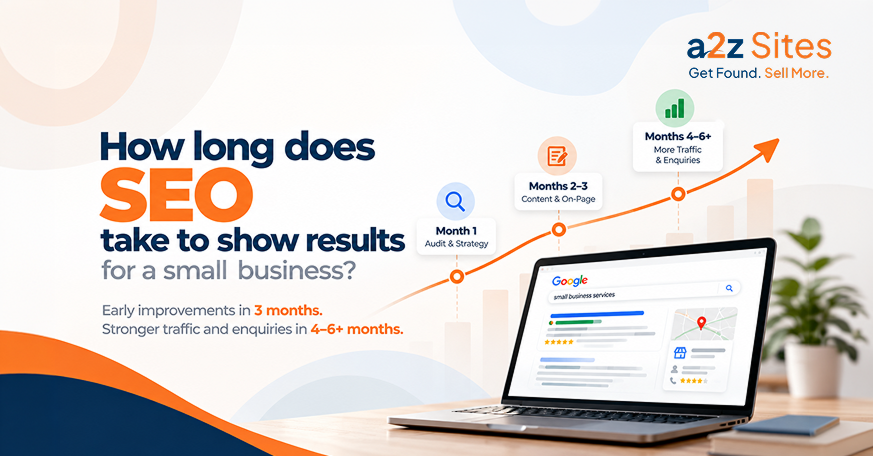
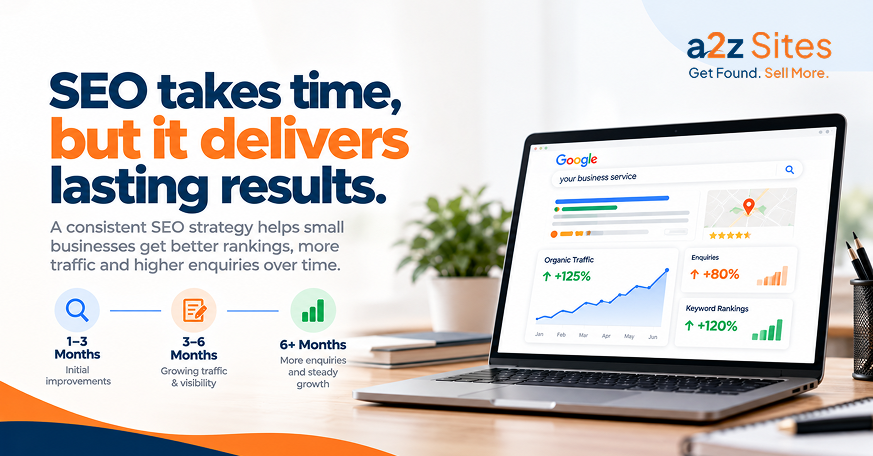
In most cases, early improvements may appear within three months, while stronger organic traffic and enquiries can take four to six months or longer. The exact timeline depends on website condition, keyword competition, content quality, and the consistency of optimization work.
Understanding these factors helps businesses set realistic expectations and decide which activities deserve priority.
How long does SEO take to show results?
There is no fixed timeline that applies to every website. A business with a technically sound website and relevant content may see progress sooner than one dealing with indexing problems, weak pages, or strong competition.
Here is what a typical timeline may look like when implementing SEO for small businesses.
Month 1: Website audit and planning
The first month focuses on identifying problems and building a practical plan. This usually includes keyword research, competitor analysis, website structure checks, and a review of existing content.
Technical issues such as broken links, slow pages, and indexing errors may also need attention. An initial audit helps establish what is holding the website back and which pages should be prioritized.
Businesses can use SEO audit services to identify these issues before investing in ongoing optimization.
Months 2 to 3: Content and on-page improvements
The next stage involves improving important pages, publishing helpful content, and making it easier for search engines to understand the website.
This work may include better page titles, headings, meta descriptions, internal links, and content that matches what customers search for. Relevant on page SEO services can help address these areas.
During this period, some pages may begin appearing for new search terms or improve their existing positions. Search impressions may increase before clicks and enquiries show a noticeable change.
Months 3 to 6: Traffic and enquiry growth
With consistent work, a website may begin attracting more organic visitors over the following months. Service pages and blog posts can gain visibility for relevant searches, bringing potential customers to the website.
The business may also begin receiving more calls, contact form submissions, or quote requests. However, increased traffic does not automatically mean increased sales. Visitors must find the right information, trust the business, and have a clear way to get in touch.
A focused SEO for small businesses strategy should therefore measure both search performance and the quality of enquiries.
After 6 months: Improving and maintaining results
SEO continues after the initial six-month period. Businesses need to review performance, update content, address technical problems, and respond to changes in search behaviour and competition.
Competitive industries may require a longer investment before important keywords achieve strong rankings. Less competitive searches may produce useful results sooner.
The aim of SEO for small businesses is to build sustainable visibility rather than depend on a temporary increase in rankings.
What factors affect the SEO timeline?
Several factors influence how quickly a website can improve its search performance.
1. Website condition and technical issues
A website with crawl errors, indexing problems, broken links, or poor mobile usability may need significant improvements before its pages can perform well.
Technical SEO services address areas such as crawlability, site speed, structured data, and technical errors. Resolving these issues helps search engines access and understand important pages.
2. Keyword competition
Broad keywords can be difficult to rank for because many established websites may already target them. More specific search terms can sometimes offer a realistic starting point for a smaller business.
Keyword selection should consider search intent, competition, location, and the services being offered. Choosing relevant terms is an important part of SEO for small businesses, particularly when resources and budgets are limited.
3. Content quality
Content should answer customer questions clearly and explain how a business can help. Publishing articles simply to include keywords is unlikely to provide the same value as useful, well-structured information.
Service pages, FAQs, and blog posts should each serve a clear purpose. They should also guide visitors towards a relevant action, such as requesting a quote or contacting the business.
4. Local competition
Businesses targeting customers in Delhi NCR need to consider competition within their service areas. A company targeting Delhi may face different search conditions from one targeting Noida, Gurugram, Faridabad, or Ghaziabad.
Local SEO services can support local visibility through Google Business Profile optimization, accurate business information, relevant location pages, and customer review management.
5. Consistency of optimization
SEO requires ongoing work. Technical fixes, content improvements, internal linking, and performance reviews should follow a clear plan.
A consistent approach to SEO for small businesses makes it easier to identify what is working, correct weak areas, and invest in activities that support business goals.
How can a small business measure SEO progress?
Rankings are useful, but they do not tell the whole story. Businesses should monitor several metrics to understand whether their efforts are producing meaningful results.
- Organic traffic: Visitors arriving from unpaid search results.
- Search impressions: How often website pages appear in Google results.
- Clicks: How many people visit after seeing a search result.
- Keyword rankings: Positions for relevant search terms.
- Qualified enquiries: Calls, form submissions, and requests from potential customers.
- Conversions: The actions visitors complete on the website.
- Revenue: Sales that can be linked to organic search activity.
Google Search Console helps track impressions, clicks, and search queries. Google Analytics can provide further insight into website behaviour and conversions.
When measuring SEO for small businesses, compare results over several months and account for seasonal demand. This gives a clearer picture than judging performance by a single week’s rankings.
How can businesses get SEO results sooner?
Although no provider can guarantee a particular ranking or deadline, businesses can take steps to avoid unnecessary delays.
Start by fixing technical problems that affect important pages. Prioritize service pages with strong business value, target relevant keywords, and publish content that answers genuine customer questions.
Improve the mobile experience, make contact details easy to find, and provide clear calls to action. Local businesses should also maintain accurate business listings and build a credible online presence.
Avoid buying links, stuffing pages with keywords, or publishing large amounts of low-quality content. These shortcuts do not offer a reliable path to lasting search visibility.
The most effective SEO for small businesses combines technical improvements, useful content, relevant keywords, and regular performance reviews.
How a2z Sites can support your SEO goals
Getting the right work done at the right time can be challenging when you are managing a business. a2z Sites helps businesses plan SEO activities around their website, target audience, competition, and growth goals.
Our SEO services for small businesses focus on website optimization, content improvements, technical checks, and performance tracking to help businesses improve their search visibility and attract relevant visitors.
For companies targeting Delhi NCR, our SEO services in Delhi provide a starting point for discussing your website needs, target customers, and growth priorities.
Get Found. Sell More.